Turn pool dimensions, weather, power access, and swimming goals into a practical above-ground pool heater shortlist—then use plain-English guides to plan the details.
Manual-first research 60+ focused guides
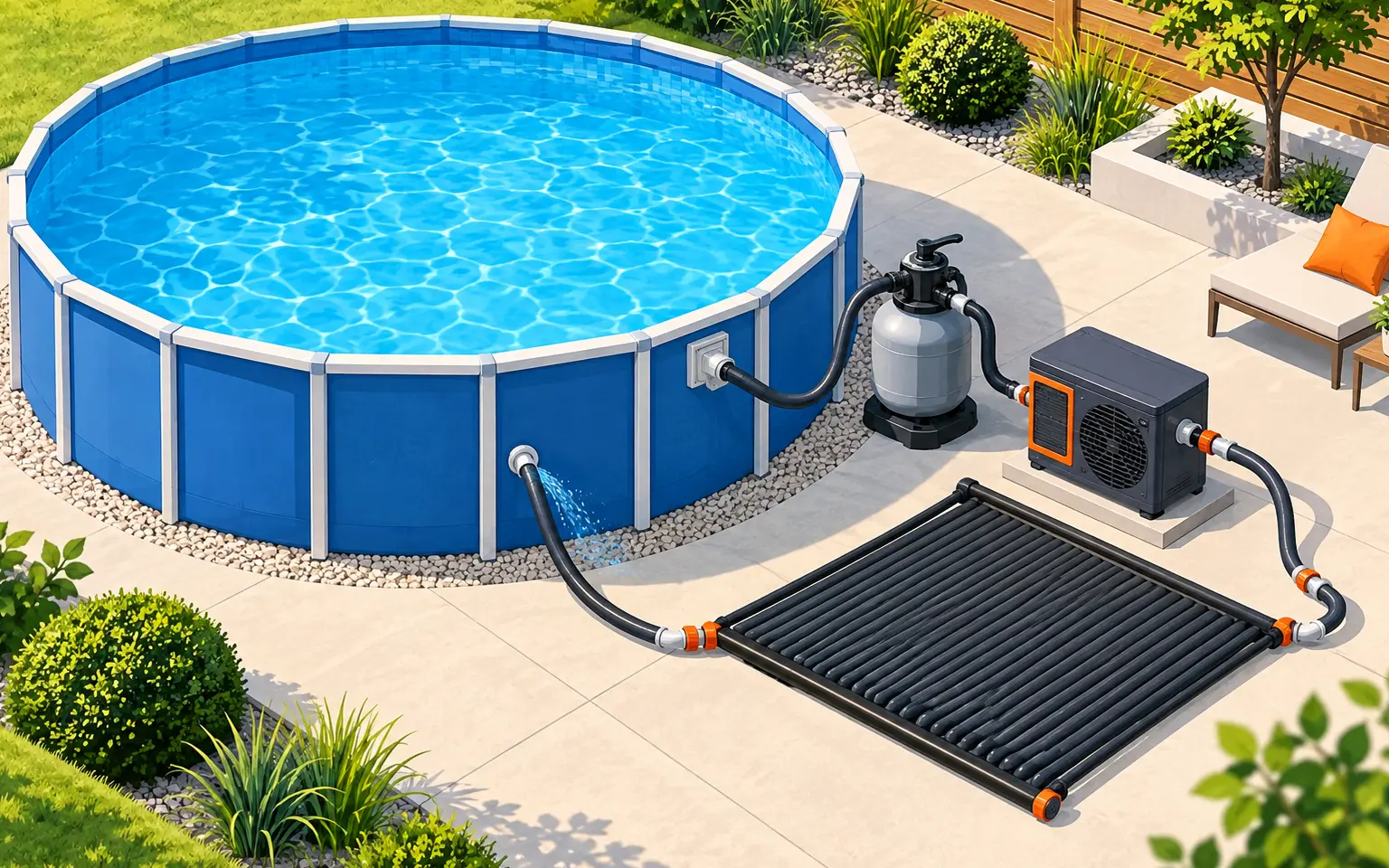
BACKYARD SYSTEM / CUTAWAY
FILTER → HEATER → RETURN
TOOL 01
Heater matchmaker
A first-pass direction—not a manufacturer sizing calculation.
Pool surface drives heat loss
Sun + cover change the load
Power access narrows choices
Flow rate protects performance
THE SHORT ANSWER
Match the heater to the pool, climate, and job.
An above-ground pool heater is not a one-size purchase. The best starting technology changes with your water volume, desired temperature rise, local weather, utility access, and whether you want occasional warmups or steady season-long control.
01 / FAST RESPONSE
Gas and propane heaters
These can make sense when rapid temperature recovery matters and fuel access is practical. Check the exact unit's input rating, minimum flow requirement, venting and clearance rules, then have installation handled to the manufacturer's instructions and local code. Faster heat does not automatically mean lower operating cost.
Heat pumps move heat from the surrounding air, so performance depends heavily on air temperature and humidity. They often suit owners who maintain a set temperature through suitable weather rather than demand a large rise on short notice. Confirm electrical service, flow, bypass guidance, and the published operating range.
Solar collectors can add heat when sun and available mounting area cooperate; a cover tackles the separate problem of evaporation and overnight loss. The two can work together, but neither promises a fixed temperature in every climate. Start with surface area, shade, wind exposure, and realistic swimming-season goals.